
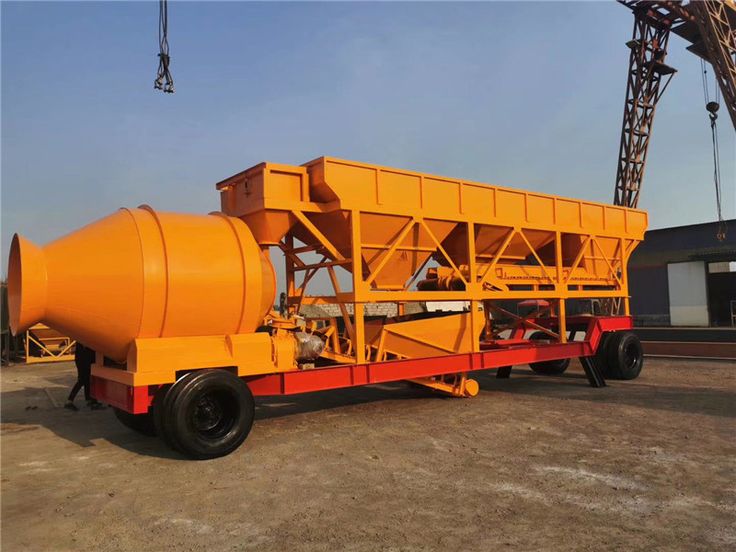
Concrete is one of the biggest costs on any Sydney construction project. And the way you supply it, whether you order ready-mix concrete delivery or run a mobile batching plant on site, can make a significant difference to your final bill.
If your project consistently uses more than 50 to 60 m³ of concrete per week, a mobile batching plant will almost always cost less than premix concrete delivery in Sydney.
For smaller, one-off pours, ready-mix concrete is still a solid choice. But once the volume climbs, the maths starts to tip hard in favour of on-site batching and the hidden costs of premix concrete start adding up fast.
We built Batchcrete International because we kept seeing the same problem: project managers budgeting only for the quoted concrete price per m³, but paying for delays, rejected loads, and idle labour that never showed up on a single line in the estimate.
I’m breaking down the truth about mobile concrete mixing plant vs premix concrete, the real math behind concrete price per cubic metre in Sydney, and why the common thinking that “premix is simpler” is actually a trap on mid-to-large Sydney builds.
Key Points
- Ready-mix N25 concrete starts at $340 to $370/m³, but the real landed cost on a Sydney site with delivery, surcharges, and access fees often exceeds $480/m³.
- Hire rates run $800 to $1,500 per week depending on plant capacity and project duration.
- At volumes above 50 to 60 m³ per week, on-site batching consistently undercuts premix once delivery fees, idle labour, and waste are factored in.
- Short-load fees, rejected loads due to traffic delays, idle crew time, and weekend surcharges are the biggest hidden costs of premix concrete in Sydney.
What Does Concrete Actually Cost in Sydney Right Now?
The number on a supplier’s website isn’t the number that lands on your invoice. That’s the first thing to understand.
The Premix Price You See Is Just the Starting Point
According to MixHub’s 2026 Sydney concrete pricing guide, ready-mix concrete in Sydney costs $320 to $490 per cubic metre in 2026, depending on grade. The most common grade, N25, sits at $340 to $370/m³. But that’s before the extras.
Here’s what gets added on top:
- Standard delivery within 20 km costs $80 to $120
- Weekend surcharge adds $50 to $80
- Short-load fee for orders under 4 m³ adds $50 to $200
- Pump hire surcharge varies but often runs $150 to $300
That N25 mix you thought you were getting at $345/m³? On a Sydney site with delivery, a weekend slot, and a pump? You’re easily looking at $480 to $560/m³ all in. According to MixHub, the price you pay can move by $50 to $200/m³ depending on your suburb, plant distance, load size, and access conditions.
What On-Site Batching Costs Instead
On-site concrete batching typically costs $165 to $210 per m³ in materials and plant operation. That’s roughly half the landed cost of premix in Sydney. Hiring a mobile concrete batching plant in Australia runs $800 to $1,500 per week depending on capacity.
For a project pouring 80 m³ per week, the weekly hire cost adds only $10 to $19 per m³. The savings per cubic metre can reach $150 to $280 compared to delivered premix concrete. On a 5,000 m³ project, that’s a potential saving of $150,000 to $350,000. That’s not a rounding error. That’s a margin-defining number.
Is Batchcrete a Real Example of This Working?
Yes. And here’s how it plays out in practice.
Batchcrete International, which has been operating since 1998 with over 30 years of combined director experience in the Australian engineering and construction industry, deploys mobile plants directly to sites across Sydney.
Rather than sending trucks through traffic, the plant sits on your site and produces fresh concrete exactly when your team needs it. No waiting. No rejected loads. No traffic holding up your schedule.
That’s not a marketing line. It’s how the economics of on-site batching actually work.
What Are the Hidden Costs of Ready-Mix Concrete Delivery in Sydney?
Ready-mix concrete has a working life of about 90 minutes from when water hits cement at the batch plant. In perfect conditions, a truck should arrive within 30 to 40 minutes.
But in Sydney, perfect conditions don’t exist. Traffic delays shorten your working window. If a load arrives borderline, your pump operator rejects it. You pay for that load, you lose crew time, and your programme takes a hit.
I’ve seen pours fail on busy Sydney corridors because a single road incident added 35 to 40 minutes to a truck’s route. The concrete arrived but it was at the edge of its working window and the call was made to reject it.
The cost of rework, wasted materials, and re-mobilising the crew was never tracked back to the concrete delivery decision. It just got absorbed into project overheads.
On top of that, there’s idle labour to consider. A five-person concreting crew billing at $65 to $85 per person per hour costs $488 to $638 for every 90-minute delay. Two delays a week across a 12-week project? That’s more than the cost of hiring a mixing plant for the entire job.
When Does Premix Concrete Still Make Sense?
Here’s the contrarian take, because not every project needs a mobile plant on site.
Ready-mix concrete delivery is still the right call when:
- Total pour volume is under 40 m³. The plant hire cost doesn’t break even on very small jobs.
- It’s a one-off residential pour. A driveway or footing is quick, simple, and manageable with premix.
- Access for premix trucks is fine. No restricted entry windows, no narrow streets, no scheduling conflicts.
- Your programme has real flexibility. If a 2-hour delay genuinely won’t hurt you, the risk of premix is acceptable.
The break-even volume, which is the point where mobile batching plant hire becomes cheaper than premix concrete delivery in Sydney, sits at roughly 50 to 60 m³ per week. Below that, premix wins. Above it, on-site batching starts saving serious money.
Mobile Batching Plant vs. Ready-Mix Concrete: Side-by-Side
| Factor | Mobile Batching Plant | Premix / Ready-Mix Concrete |
| Concrete price per m³ (supply) | $165 to $210/m³ | $320 to $490/m³ (delivered, Sydney) |
| Delivery dependency | None, produced on site | Fully dependent on truck schedules |
| Traffic delay risk | Zero | High in Sydney metro |
| Short-load fees | Not applicable | $50 to $200 per order |
| Weekend surcharges | Not applicable | $50 to $80 per delivery |
| Mix quality control | Full on-site control | Can vary with transit time |
| Concrete waste | Near zero, batch to demand | Often 10% or more over-ordered as buffer |
| Break-even volume | Around 50 to 60 m³/week | Best under 40 m³ total |
| Best for | Large-volume, multi-stage, restricted-access sites | Small residential or one-off pours |
People Also Ask
1: Do you need council approval to set up a batching plant on a Sydney construction site?
In most cases, it is treated as standard construction equipment under your existing development consent. But some Sydney councils have specific rules around noise, dust, and water runoff, so it’s always worth a quick check with your local LGA.
2: How long does it take to set up a mobile concrete batching plant on site?
Most plants are up and running within one to two days of delivery. It depends on your site conditions and whether water supply and aggregate storage are already sorted.
3: Can a batching plant handle large commercial pours in Sydney?
Yes. A single plant feeding a concrete pump can produce over 55 m³ per hour when fully loaded. That’s competitive with multi-truck premix schedules and comes with zero traffic dependency.
4: Is a mobile batching plant a good fit for hard-to-access Sydney construction sites?
It’s actually one of the best fits. Once the plant is set up, you don’t need trucks coming in and out at all. That makes it a practical solution for tight residential streets, sloped blocks, and sites with restricted delivery windows.
5: Where can I hire or buy a mobile concrete mixing plant in Sydney?
Batchcrete International offers mobile concrete batching plants for hire and sale in Australia, including on-site support across Sydney. Their site covers hire terms, plant capacity options, and project suitability.
Final Words
Don’t wait until the next pour goes sideways. Pull your last three months of premix invoices and add up every surcharge, short-load fee, and weekend premium. Then estimate the crew hours lost waiting for trucks.
That number is your business case for a mobile batching plant and it’s almost always bigger than expected.
Talk to our team and run the break-even calculation for your next project before you place your next premix order. It takes 10 minutes. The answer might change how you price every job after this one.
