
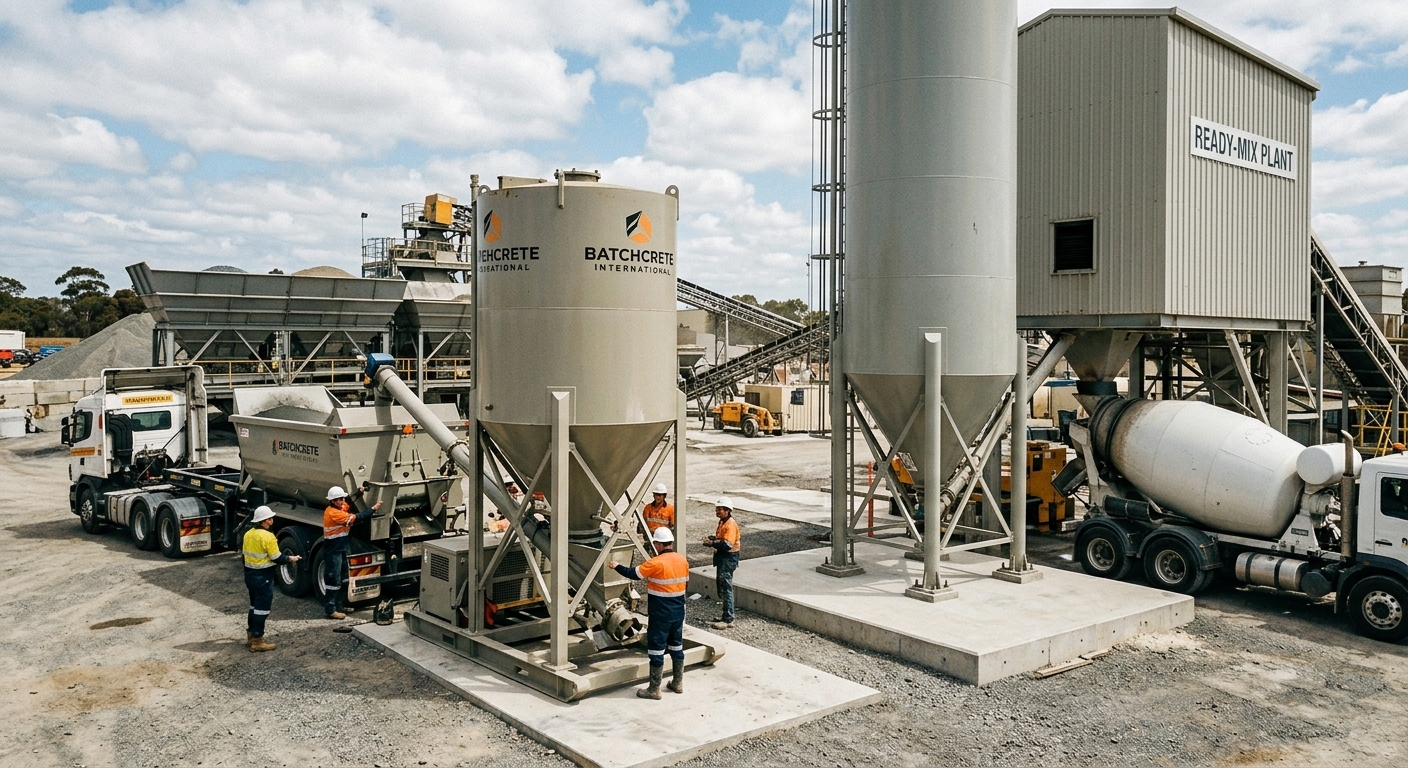
Cement costs keep climbing, and every bag wasted on a bad storage setup is money straight out of your margin. Add in delayed pours, dusty spillage, and silos sitting half empty because nobody sized them properly.
Portable cement silos win for projects under 12 months, remote sites, or jobs with tight access, because they install without a crane and move fast. Stationary silos win for permanent, high-volume jobs like ready mix plants and precast yards, where storage size and fewer refills matter more than moving easily.
There’s no single “best” silo. There’s only the right silo for your job.
We built our cement storage and dispensing range at Batchcrete International because we kept seeing sites lose money on gear that was the wrong size, badly set up, or ignored until it broke down.
I’m breaking down the truth about portable versus stationary silos, the real math behind picking the right size, and why “just buy the biggest one you can afford” is actually a trap that wastes money and eats up site space.
Key Takeaways
- Portable silos set up without a crane and suit jobs under a year or sites with tight access.
- Stationary silos offer bigger storage and fewer refills, best for permanent, high volume work.
- Sizing your silo to actual daily use, not “just in case” size, avoids the two biggest cost mistakes.
- Safety parts like alarms, dust collectors, and load cells aren’t optional add ons, skipping even one turns storage into a hazard.
So What’s Actually Different Between These Two Silo Types?
On paper, both do the same job: store cement and feed it into your mix. In practice, they’re built for two completely different worlds. One is about speed and flexibility; the other is about scale and staying power.
Get this distinction wrong, and you’ll either overpay for capacity you don’t need or underbuy for a job that needed more muscle.
The Portable Silo Case
A portable silo, also called a mobile cement silo or transportable cement silo, sits on skids or wheels. You can move it between sites without a crane and without weeks of planning. That’s really the whole point.
I’ve seen contractors delay a job start by three weeks because they assumed a stationary silo was the “serious” choice. It wasn’t the right call. Their job only ran eight months.
The Stationary Silo Case
Stationary silos are a completely different tool. They’re fixed in place, bolted onto a concrete pad, and built for high-volume, long-term jobs like permanent batching plants or precast yards.
Stationary silos are used in ready mix plants, large precast facilities, and aggregate batching operations where high cement volume is needed, giving the biggest storage capacity and built to last for years, paired with large screw conveyors, blowers, and dust collectors.
Batchcrete International’s own range shows this split clearly. Their mono and telescopic panel silos are built for contractors who move sites often. They travel compact, extend to full height on arrival, and suit remote job sites because they’re simple to transport. That’s not a sales pitch, it’s just how the equipment is designed to work.
The Timeline Test Nobody Talks About
Forget brand loyalty. Forget what your mate used on his last job. Use this checklist instead.
- Map your project length. If your job runs six to twelve months and then you’re moving on, portable is the smarter pick. If you’re running the same fixed job for years, stationary pays off.
- Work out your daily cement use, not weekly, not “roughly.” Size your silo to what you actually use each day. Buying too big ties up money and site space for no real gain.
- Check site access. Cranes and long lead times aren’t small extras; they’re deal breakers on tight sites.
- Never skip safety gear. A high-level alarm tells you when the silo is nearly full, a dust collector stops cement dust escaping during filling, and load cells show exactly how much is left. Miss one part and you’re not running a safe silo anymore.
- Match discharge speed to your mixer. The size and speed of the auger decides how fast cement reaches the mixer, and plants with busy mixers need fast, steady discharge.
Here’s the Contrarian Bit: Bigger Isn’t Safer
Most people think a bigger silo is the “safe” buy. It isn’t. An oversized stationary silo on a short job bleeds money through pad costs, freight, and storage space you never even use.
And a portable silo isn’t always cheaper in the long run either. But that’s a different question to safety and risk. The real risk is a mismatch, wrong silo for the wrong job, not the size on its own.
Because here’s what most suppliers won’t tell you. This is where most buying decisions go wrong. People pick based on what a mate used last job, not what actually suits their own site.
Portable vs. Stationary: The Quick Comparison
| Factor | Portable Silo | Stationary Silo |
| Setup time | Hours, no crane needed | Days, needs a pad and crane |
| Best project length | Under 12 months | Multi year or permanent |
| Storage size | Lower to mid range | High capacity, fewer refills |
| Site needs | Flexible, for remote sites | Fixed spot, engineered pad |
| Upfront cost | Lower starting cost | Higher, but pays off over time with volume |
The Numbers Behind the Demand
This market isn’t slowing down. IndexBox estimates a 4.2% yearly growth rate for the global cement silos market between 2026 and 2035. That growth is being pushed by infrastructure spending and by more contractors wanting control over their own cement supply instead of waiting on ready mix delivery windows.
On sizing, the advice from equipment experts stays the same. The goal is to size the silo so your work never stops for refills, since an undersized silo causes downtime and an oversized one costs more and eats up space. That’s really the whole game in one line.
FAQ: What People Actually Ask
1. Do portable silos need a concrete pad?
Usually just a light footing, not the full engineered pad a bolted down stationary silo needs.
2. How much does a cement silo cost to rent versus buy?
Renting suits a single short job. Buying pays off once you’re running silos across several sites each year.
3. Can portable silos store materials besides cement?
Yes. Most handle fly ash, lime, and slag too, not just cement.
4. What size silo suits a small job site?
Match it to your daily use first. Most small crews guess wrong and end up with too much silo.
5. Do stationary silos need more maintenance?
Not really more, but downtime costs more since moving a fixed silo simply isn’t an option.
Your First Step
Don’t ask for a quote yet. Pull your last three months of cement delivery dockets first. That number tells you your real daily use. Match that number to a silo size, not the other way around. Then call a supplier like Batchcrete International, who’ll size it properly, not just sell you the biggest one in stock.
