
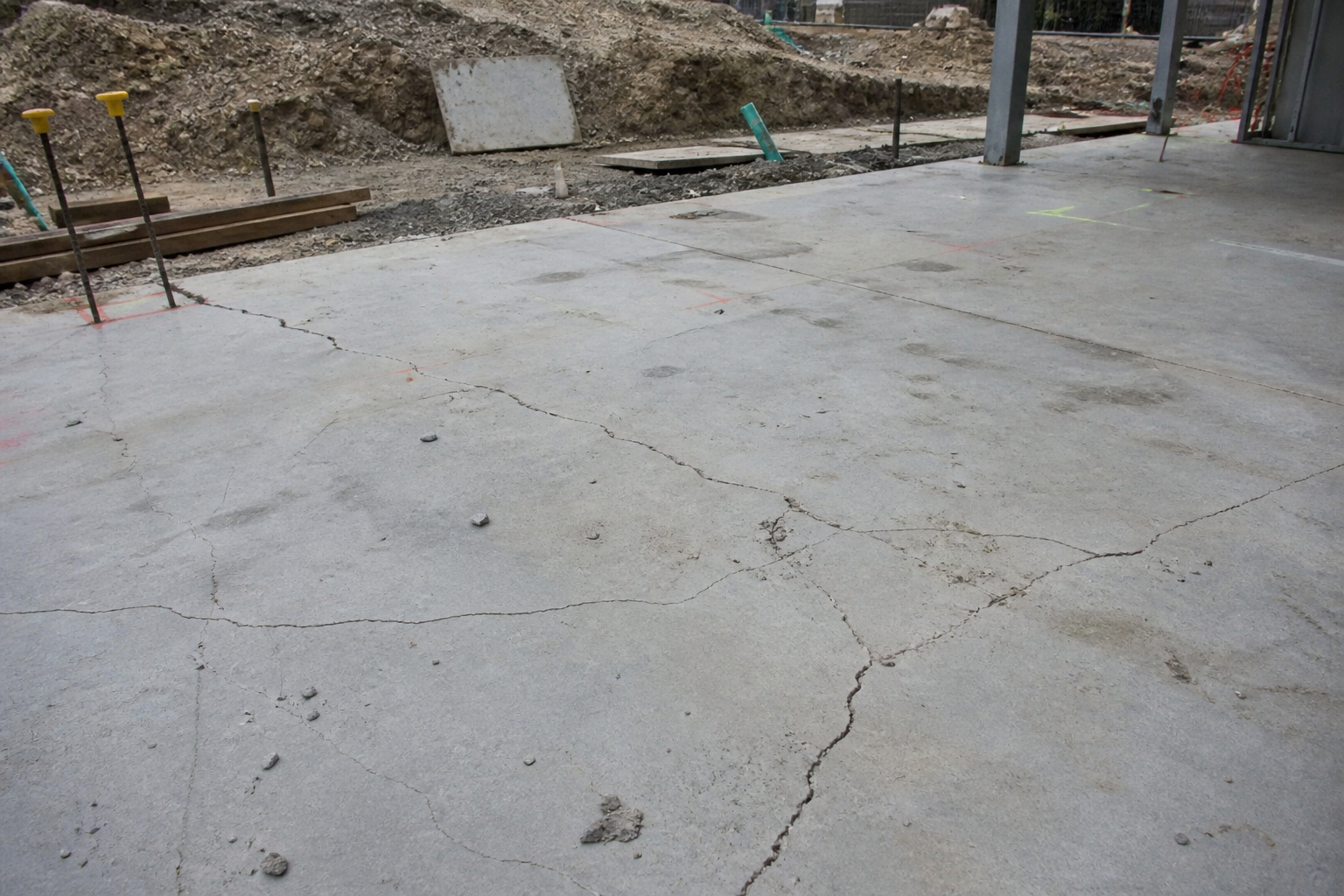
You are looking at your project spreadsheet. The “Material Costs” column is trending into the red, and you are feeling the pressure to cut back anywhere you can. Then, you find a quote for concrete that is significantly lower than the market average here in Brisbane. It looks like a massive win for your project budget.
Stop right there.
Cheap concrete is never a bargain. In my experience, choosing concrete based solely on the lowest price tag is the fastest way to blow your entire budget.
You are not saving money; you are simply kicking the true cost of your project down the road. When that “cheap” concrete fails, you will pay three to five times more in repairs, labour, and project delays than you saved on the initial purchase.
Key Points
- Cheap concrete is a hidden trap that leads to expensive repairs down the road.
- You will end up paying extra for re-pours, project delays, and constant maintenance if you cut corners.
- Don’t just hunt for the lowest price; always specify the exact strength (Mpa) and exposure class you actually need.
Why “Cheap” Concrete is a Dangerous Trap
However, many individuals believe that concrete is simply sand, water, and cement mixed together in a ratio that may differ according to the project. This is a deadly misconception.
Concrete, in truth, is a highly complex chemistry set. To provide the customer with an “incredible” price, they will often make compromises on the costly components of their blend.
The biggest misconception I notice is when managers at building sites pay close attention to the cost per cubic meter while ignoring the actual contents of the mixture in the trucks.
What will happen on the construction site when you concentrate on a lower price?
-
Too much Shrinkage
An excessively high water content in any concrete mixture will cause excessive shrinkage of the material during the curing and drying process.
-
Surface Spalling
If the concrete isn’t durable, the top layer will start to flake off within a few years. It becomes a maintenance nightmare that you have to explain to your client.
-
The Re-Pour Nightmare
If the concrete fails a strength test, you cannot just “fix” it. You have to rip it out, pay for a skip bin to haul away the rubble, and pay for the labour to do the whole job over again.
The Brisbane Climate Factor: Why Local Matters
The hot, humid and tropical weather in Brisbane is unforgiving. It is difficult not only to live but also to work due to the extreme heat, humidity and sudden changes in temperature. These conditions cause a great deal of strain on the curing process.
Low-priced concrete often fails in our local weather. Budget suppliers frequently skip the essential chemicals needed to manage how the concrete sets. Without these, your concrete will dry too fast or shrink in the heat.
When you go cheap, you are buying a mix that isn’t built to survive a Brisbane summer. You aren’t just buying a material; you are buying a product that actually needs to hold up in our specific local weather.
The True Cost Comparison: A Reality Check
Many people see a lower quote and assume they are winning. You have to look at the total cost of ownership, not just the upfront invoice. Here is how it actually shakes out on a real job site:
| Cost Factor | “Cheap” Concrete Approach | Quality/Specified Mix |
| Initial Purchase | Lower cost (-10%) | Market average |
| Curing/Labour | High (Requires constant watching) | Standard process |
| Maintenance (Years 1-5) | Very High (Repairing cracks/spalling) | Minimal |
| Asset Value | Low (Structural concerns) | High (Long-lasting finish) |
| Total Lifecycle Cost | Very Expensive | Economical |
Expert Insight: What Matters More Than Price?
I spoke with a veteran site supervisor in the Moreton Bay region about this. He gave me a reality check that every developer needs to hear:
“The biggest issue I see is that developers treat concrete like a commodity, almost like buying bulk gravel. If the supplier can’t give you a test report on their mix design, you’re flying blind. You aren’t buying concrete; you’re buying a structural guarantee. If the guarantee isn’t there, the price doesn’t matter.”
Australian Standard AS 3600 sets the rules to make sure concrete is safe and lasts as long as it should. Sadly, cheap suppliers often ignore these rules. If they skip the required testing, you end up with weak concrete that cracks or fails. To protect yourself, always ask the supplier for a compliance certificate.
When is “Cheap” Actually Okay?
I am not saying you always need the most expensive high-performance concrete (HPC) for every single job. You shouldn’t over-engineer a simple garden shed slab with industrial-grade concrete. That is just wasting your capital.
“Cheap” concrete is a bad deal, but “right-sized” concrete is smart. If you are doing a non-structural pour, ask your supplier for a standard residential mix that meets the minimum strength (Mpa) for your local council regulations.
Don’t pay for premium concrete you don’t need, but never pay for concrete that sits below the quality threshold for your specific site conditions.
How to Vet Your Concrete Supplier
Don’t just ask for a price. Ask these three questions to separate the real professionals from the ones trying to cut corners. If they are a good supplier, they will be happy to answer these:
- “Can you provide the mix design and test results?” If they hesitate, make excuses, or tell you it’s “proprietary,” walk away. They are hiding something.
- “How do you adjust the mix for Brisbane’s current heat and humidity?” They should be able to explain how they use additives to manage the set time so the concrete doesn’t crack in the sun.
- “What is your water-to-cement ratio?” A high water content is the hallmark of a cheap, weak mix. A professional supplier will know this number immediately.
People Also Ask (FAQ)
1. Is cheaper concrete actually lower quality?
Yes. Lower prices are almost always achieved by reducing the amount of cement, using cheaper fillers, or skipping the additives that ensure durability and long-term strength.
2. How much should a cubic meter of concrete cost in Brisbane?
In 2026, the average price of normal concrete per cubic meter will fall in the range of $250 to $350. Be cautious if you receive a quotation much lower than this rate. When the cost is very low and appears unbelievable, it may be a red flag for poor quality.
3. Is the quality of concrete relevant to driveways?
Yes, it is crucially important. Pouring low-quality concrete on your driveway, which will be used by vehicles, will result in cracks or depressions even if the groundwork was done perfectly.
4. What is the curing period for concrete?
Concrete attains around 70% of its strength within 7 days; however, its curing time spans 28 days. The first 48 hours after pouring concrete in Brisbane require moisture to prevent its premature drying and subsequent formation of cracks.
5. Whose responsibility is the defective concrete?
If the concrete was ordered based on particular specifications such as N25 or N32, and the delivered mix did not pass through quality assurance tests, then the fault rests with the supplier. However, when “the cheapest one” was requested, all the responsibility lies with you.
Final Thoughts
When it comes to construction in Brisbane, your reputation is built on the concrete you pour. Do not let a small, short-term saving risk the longevity of your project or your professional reputation.
My advice is simple: Stop asking for the “cheapest price.” Start asking for the best value per Mpa. By specifying the right mix for your climate and load requirements, you’ll avoid the massive headaches of remediation and build a project that stands the test of time.
