
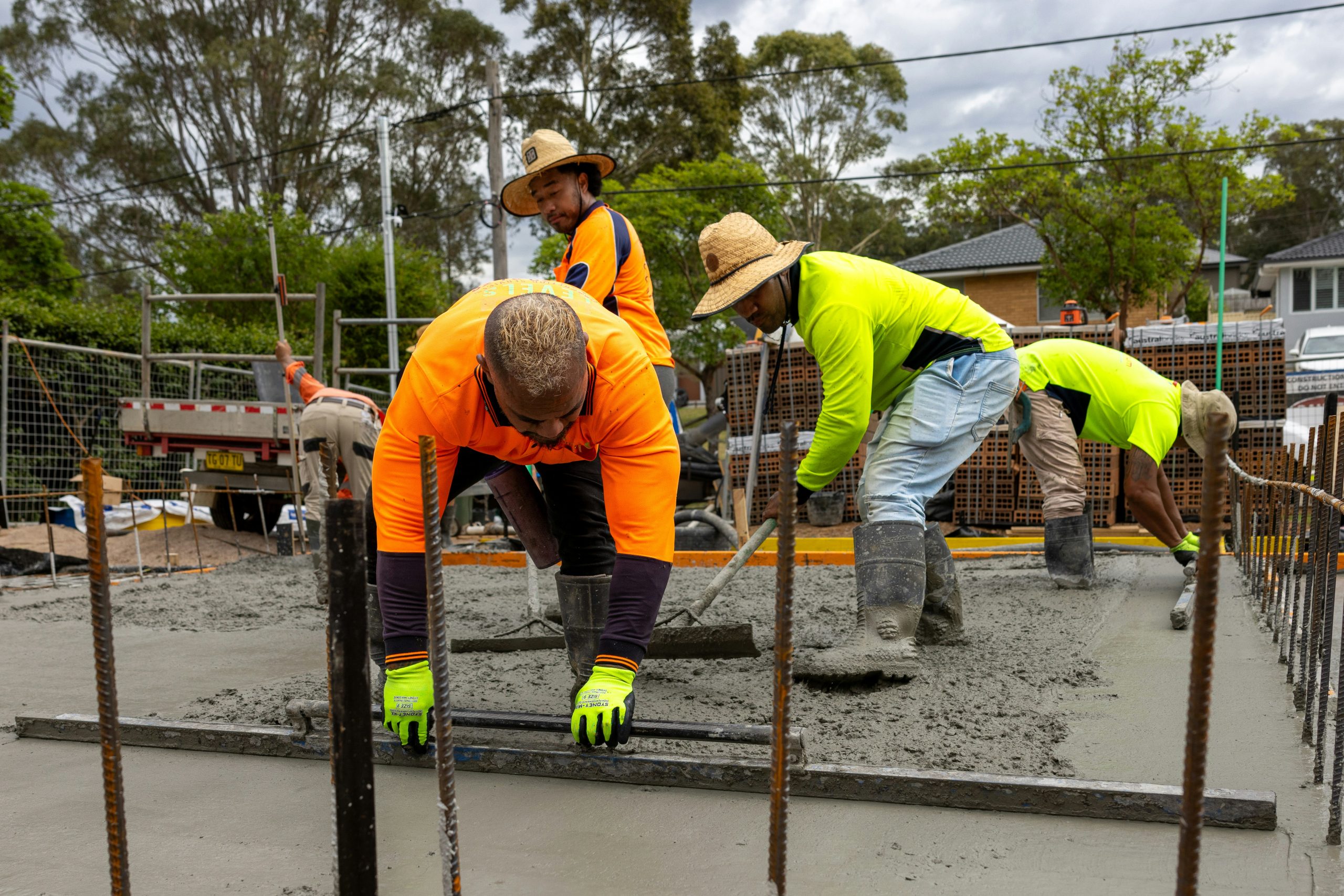
This is Brisbane’s most common concrete problem, and it’s completely avoidable. The fix comes down to three things: know your access, pick the right equipment, and understand that a line pump, a mini mix truck, and small batch delivery are three different tools. Pick the wrong one and you’re paying waiting fees, short-load charges, and moving concrete by wheelbarrow.
I’m breaking down the truth about Brisbane’s tight-access sites, the real difference between a concrete line pump and a mini mix truck, and why “just get a boom pump” is often the worst advice on the job.
Key Takeaways
- A concrete line pump in Brisbane is the right call when the pour is more than 5 metres from where a truck can park.
- Mini mix concrete in Brisbane works best for jobs under 3m³ where a compact truck can reach within chute range.
- Small load concrete and small batch concrete services charge only for what you use, making them ideal for small footings, repairs, and slabs under 2m³.
- Site managers booking concrete delivery in the CBD must confirm loading zone rules with Brisbane City Council before the truck is ordered.
Why Is Tight Access Such a Big Problem in Brisbane?
The inner city areas of Brisbane were never designed for the large trucks. Areas like Paddington, Red Hill, New Farm, West End, Fortitude Valley, and Toowong consist of hilly terrain, laneways, and older-style Queenslander houses. They existed long before a 9-tonne concrete truck did.
According to the Australian Bureau of Statistics Building Activity data, new private sector residential commencements rose 23.4% to 23,849 dwellings nationally in the most recent quarter.
A large share of that activity is happening right here in Brisbane’s established suburbs, on exactly the kind of tight sites that cause the most headaches.
What Equipment Actually Works on Tight Brisbane Sites?
Let’s discuss in detail:
-
Concrete Line Pumps
A concrete line pump sits on a trailer and pushes concrete through a flexible rubber hose. It is usually 50mm to 80mm wide. You run that hose around corners, through a side gate, down a narrow path, or into a basement. It doesn’t need overhead clearance the way a boom pump does.
In Brisbane, Concrete line pump hire costs far less than a boom pump and is much faster than wheelbarrows. I’ve watched site managers in South Brisbane spend three hours moving a 3m³ backyard slab by hand when a line pump would have done it in 45 minutes.
Because the hose is flexible, you can push concrete pumping Brisbane jobs around corners and through tight entries across runs of 80 to 120 metres. Line pumps are the right call for pool surrounds in Coorparoo, retaining wall footings in Red Hill, shed slabs in Chermside, and patio pours in Toowong.
-
Boom Pumps
A boom pump is great for large, open projects. Multi-storey builds in Brisbane CBD, big slabs in new housing estates, and wide open commercial infill jobs are all boom pump territory.
But a standard boom pump truck needs around 7 to 10 metres of clearance to set its outriggers. In a Fortitude Valley laneway or a South Brisbane townhouse site with a 2.5-metre side entry and overhead powerlines, that truck is not getting anywhere near the pour. Don’t book a boom pump until you’ve measured your clearances on foot.
-
Mini Mix Concrete Trucks
Mini mix concrete is standard ready-mix concrete delivered in smaller loads using compact agitator trucks. These trucks are built for tight, hard-to-reach areas. Mini mix concrete trucks typically measure around 6.6m x 2.6m x 3.5m.
This means they can access narrow driveways, steep suburban blocks, and small residential sites that a full-size truck can’t touch. For sites in Paddington, New Farm, or Toowong where a driveway might be under 3 metres wide, this is often the simplest and most cost-effective solution.
-
Small Batch Concrete
Sometimes the problem is you only need 0.5m³ for a footing or 1.2m³ for a small patio. Standard concrete delivery in Brisbane usually has a minimum load, and short-load fees can add serious cost fast.
Small batch concrete services mix exactly what you need on site. No leftovers, no waste, and no short-load penalty. For a driveway repair in Bulimba or a house extension footing in Carindale, that saving is often what makes a small job worth doing at all.
Line Pump or Mini Mix? Here Is the Simple Answer
It comes down to two things: how much concrete you need and how far the truck is from the pour.
- If the truck can park within 5 metres of the pour, use a compact mini mix. No pump needed. It’s simpler and cheaper.
- If the truck can’t get close because of a fence, side path, staircase, or gate, book a line pump. Yes, line pump hire in Brisbane adds to your cost. But I’ve seen that cost paid back in saved labour time on every single job.
How to Plan Concrete Delivery for a Tight Brisbane Site
Work through this checklist before you book:
- Measure your narrowest access point including overhead height. A 2.7m gate is not fine for a standard concrete truck in Brisbane.
- Check street rules. According to Brisbane City Council, heavy vehicles can only park for up to one hour within 100 metres of residential land. CBD work zone permits are limited to 12-hour windows. Sort this before ordering.
- Map the distance from truck to pour. More than 5 metres with no clear chute line means you need concrete pumping in Brisbane.
- Check the slope. Steep blocks in Red Hill and Paddington affect where a line pump can be safely positioned.
- Find a washout spot. Every concrete truck needs one. A standard agitator carries up to 100L of washout water.
- Ask about short-load fees. If you’re under 3m³, expect a fee unless you use a small load concrete service.
- Lock in your delivery window. A missed window can push your entire pour back by a full day.
Pumping Isn’t Always the Right Call
Brisbane has shifted towards recommending a pump for almost every residential job. And yes, pumping is faster and cleaner. But for a 0.8m³ shed slab, you’re paying pump hire on top of delivery costs.
If a compact mini mix truck can chute directly to your pour, you’re spending money for no real gain. I’ve watched site managers in Toowong pay over $400 for a line pump on a job that a mini mix could have handled in one chute. Pump when the site demands it. Not because it’s become the default.
Frequently Asked Questions
1. Can concrete be pumped around corners or through a narrow side path?
Yes. A concrete line pump uses a flexible hose that bends around corners and fits through standard gate openings. Most units run 80 to 120 metres from the truck to the pour.
2. What is the cheapest way to get concrete into a hard-to-reach area?
If a compact mini mix truck can get within chute range, that’s your cheapest option with no pump hire needed. If it can’t, a line pump will save more in labour than it costs in hire fees.
3. How do I avoid delays on a pour with limited site access?
Book your concrete delivery in Brisbane and line pump hire together. Give both suppliers the full site details including width, distance, slope, and volume. Have your washout area ready and brief your crew before the truck arrives.
4. Do I need council approval before pouring a concrete slab or driveway in Brisbane?
It depends on the size and location of the pour. A basic backyard slab usually doesn’t need approval but a new driveway crossing or large structural slab often does. Check with Brisbane City Council before you start so there are no fines or stop work orders on the day.
5. Can I get concrete delivered on weekends or public holidays in Brisbane?
It is possible for most concrete suppliers to pour concrete during weekends. But their schedule is limited, and they charge an extra fee. Pouring concrete on public holidays is even more difficult and expensive than on the weekends. Make sure you book your concrete delivery way ahead of time.
Final Words
Measure your place yourself while you take a walk around the place today. Remember to measure the narrowest point for delivery, the distance from the kerb to where you want the concrete to be poured, and anything that can affect its pouring. This 10-minute measurement will make all the difference.
Then call your supplier to describe the site before you book. Share the width, distance, volume, and slope. Let them confirm which method fits. That one conversation is where the job is won or lost.
